
Building Leak Investigations Based in Edenbridge, Kent
Using advanced methods to detect leaks
Specialising in commercial and large residential properties
We offer this service when a there is a known leak somewhere in a building and the source needs to be identified.
We work on both new or old buildings of any size, but our speciality is in commercial buildings or large domestic buildings such as blocks of flats, hospitals, factories, sports centres and public buildings such as libraries.
Leaks can manifest in any part of a building such as beneath the roof, through a wall, above windows, or into the basement. We will identify the source of the leak and advise our clients on the necessary repairs required to resolve the problem
How We Test
There are many possible leak sources from the roof waterproofing and glazing to cladding and poorly sealed pipe penetrations, therefore we have a range of testing methods that we use to resolve the problem quickly and efficiently, depending on where the leak is.
Electronic Leak Detection
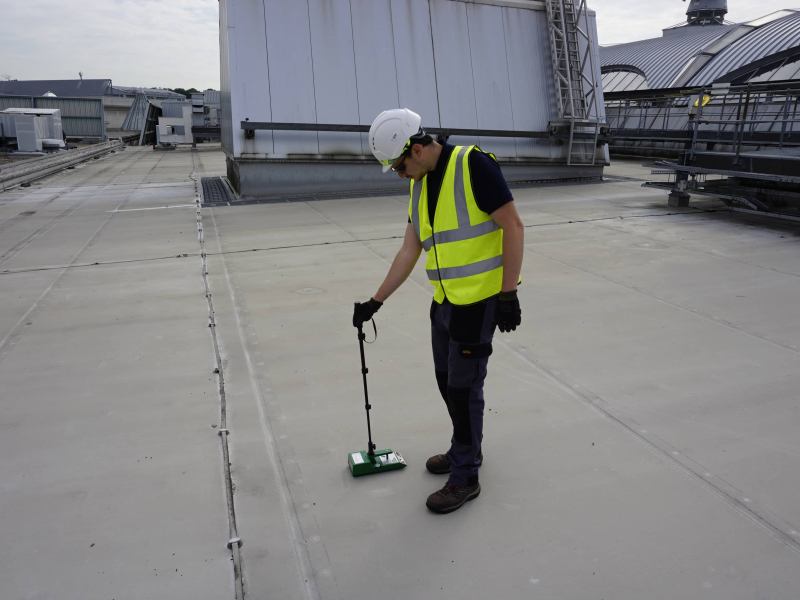
The process involves electronic leak detection of the waterproof covering and is typically undertaken by one of two methods, depending on the roof build-up and waterproofing to be tested. Both test methods rely on the electrically conductive properties of the substrate and insulating properties of the waterproofing for accurate detection of breaches and is suitable for most types of membranes. The test can be undertaken to both horizontal and vertical waterproofing, ensuring the entire roof is tested.
Flood Testing
This has largely been superseded by electronic testing as a means of establishing the waterproofing integrity of a roof or other installation. It can still be useful, however, where finishes are in place and electronic testing is impractical.
We have developed a system of creating flexible dams to improve the speed of preparatory works for instigating the flood test. Information is available on request.
Care must be taken when specifying flood testing and the following needs to be considered:
- Will the roof take the weight?
- What are the effects of major water ingress?
- Who monitors it overnight?
- Will the drainage system take the pressure of release?
Please feel free to get in touch if you require a flood test.
Moisture Profiles
This process uses an electrical capacitance technique, whereby electric discharge is reflected back by moisture, thus allowing high levels of moisture to be detected below the waterproofing membrane without disturbing it.
By measuring relative moisture content across structures such as roofs, a moisture profile can be developed that often points towards the leak source.
Moisture profiling can also identify damage to insulation and provides guidelines as to whether the roof should be replaced.
This is typically combined with core samples of the roof which provide important information on the roof construction and allow accurate calibration of the test equipment.
Simulated Rainfall Test
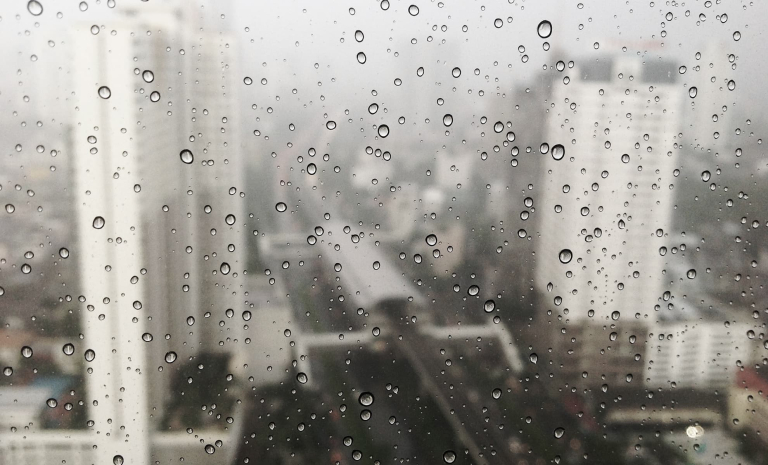
The simulated rainfall testing technique is often used in conjunction with other tests to recreate a leak or confirm the integrity of a particular suspect item.
We have been using this process for over 30 years and have gradually refined the techniques so that it is rarely the case that a leak stays elusive for too long.
The technique is also used when other test methods are inappropriate or progress is best served by testing items identified on inspection as suspect.
Colourants are used only if absolutely necessary but are a valuable part of the diagnostic process.
Borescope Inspections
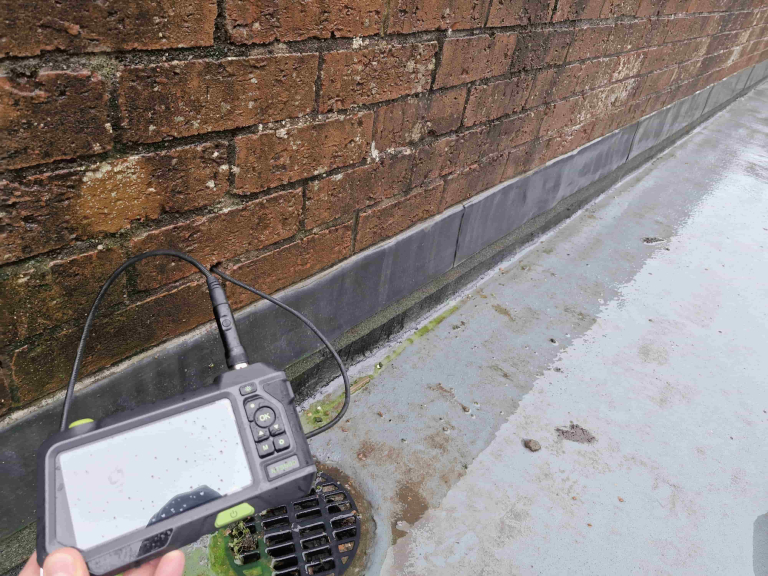
This borescope inspection technique, similar to an endoscope as used in medical applications but with a rigid probe, is an excellent diagnostic tool for checking and inspecting wall cavities in particular, as there can be many different problems deep inside that can lead to building leaks.
In addition, we also use flexible inspection cameras to investigate other areas of the building fabric where access is either restricted or otherwise impossible.
We can also combine a borescope inspection with simulated rainfall testing for greater accuracy and earlier diagnosis.
Ultrasound Testing
We use ultrasound testing to determine air paths in impermeable sections of the building envelope, especially glazing and curtain walling.
It is a vital part of our equipment, if for no other reason than we can eliminate these elements, thus allowing us to concentrate on other items.
Ultrasound readings are not always simple to interpret, so our experienced consultants know how to filter out extraneous sound. We normally combine this with simulated rainfall testing to confirm the problem.
Our Reports
A comprehensive test report covering all areas, images, and a marked up plan will be issued for each roof and test area completed at completion of the project.

Building Leak Investigations FAQs
-
1. What is a building leak investigation?
-
A building leak investigation is systematic process used to determine the source and cause of unwanted water ingress and damp in buildings.
-
2. What areas of the building can you investigate?
-
- Roofs, balconies & terraces
- Exterior walls & facades
- Basements
- Glazing & curtain walls
- Loading bays & car parks
-
3. Can there be more than one source of the leak?
-
Yes. Buildings can experience multiple, simultaneous leaks. Our methodical approach—refined through decades of experience—is designed to identify and isolate each source, providing clients with clear, comprehensive information to support effective and targeted repairs.
-
4. What are the benefits of building leak investigations?
-
- The source of each will be accurately located and diagnosed
- Findings will be documented in a comprehensive report including photos and drawings
- Eliminates guess work and is more cost effective than undertaking unnecessary repairs
- Peace of mind for landlords, facilities managers, occupants or anyone with the responsibility of resolving a leak
Speak to an Expert About Your Project
Call us on 01342 410508, email us at mail@thorntonconsulting.co.uk or send us a message using the form below. A friendly member of our team will be in touch shortly.
Client Testimonials
Areas we cover in Kent
Thornton Consulting provides Building Leak Investigation services across the Kent area including Ashford, Canterbury, Chatham, Dover, Edenbridge, Gravesend, Kings Hill, Maidstone, Margate, Sevenoaks, Sittingbourne & Tonbridge.
Building Leak Investigations Blog & Case Studies
To find out more about Building Leak Investigations and how we use it in our work read our case studies and blogs below.



Get in Touch Today
Call us on 01342 410508, email us at mail@thorntonconsulting.co.uk or send us a message using the form below. A friendly member of our team will be in touch shortly.
"*" indicates required fields


