
Leak Investigations at a Hospital in the West Country
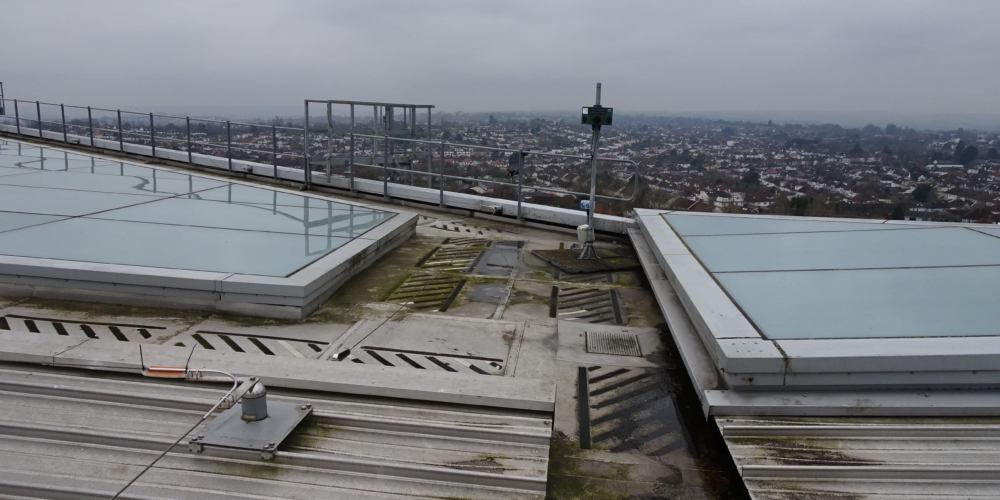
A major hospital in the West Country was facing eight persistent internal leaks across key clinical and staff areas. Despite repeated maintenance attempts, the source of the ingress remained unclear due to the building’s complex roofscape. The roof largely consisted of a standing seam roof with large atriums surrounded by aluminium gutters. Smaller adjoining roofs were waterproofed with a hot-melt system applied to the concrete deck.
Our client engaged us to deliver a comprehensive, end-to-end leak investigation, identify the root causes, and provide actionable solutions. Our specialist diagnostics enabled the hospital to address long-standing issues swiftly and with confidence.
Scope of Works
- Accurately determine the source of the eight leaks.
- Undertake testing to the glazed atrium to establish integrity
- Inspect and test the sheet metal roof and gutters
- Produce a comprehensive report of findings with actionable solutions
Our Approach
We deployed a tailored combination of advanced building leak testing techniques to accurately track each water ingress pathway:
Ultrasound Testing – Atrium Glazing
State-of-the-art ultrasonic analysis was used to detect hidden failures in glazing seals and interfaces—often impossible to diagnose visually.
Simulated Rainfall Testing
Controlled water testing recreated severe weather conditions, allowing us to observe how water interacted with glazing seals, roof seams and other building interfaces in real time.
Localised Flood Tests
Flood testing of the ballasted hot-melt roofs helped us to assess their integrity. These were found to be functioning satisfactorily.
Borescope Cavity Inspections
Targeted borescope surveys were used to inspect cavity walls to reveal otherwise inaccessible areas of the structure. This, alongside simulated rainfall tests, indicated water paths pathways into the structure.
Findings
Our investigations uncovered three primary causes behind the eight internal leaks:
- Degraded atrium glazing seals, allowing wind-driven rain to penetrate the structure
- Gutter performance issues, including some poorly sealed joints at the base of upstands.
- Cavity tray detailing defects, water could not drain effectively from the structure, instead migrating past the tray into the structure beneath.
Conclusion
Our findings equipped the hospital with:
- A clear diagnosis for every leak
- A prioritised, cost-effective remedial plan
- Recommendations to enhance long-term roof performance
- Guidance for ongoing monitoring to ensure issues do not recur
The hospital was able to move forward with targeted repairs, avoiding unnecessary works and minimising disruption to clinical services.
Our Accreditations


