
Leak Investigations at a Shopping Centre in East Sussex
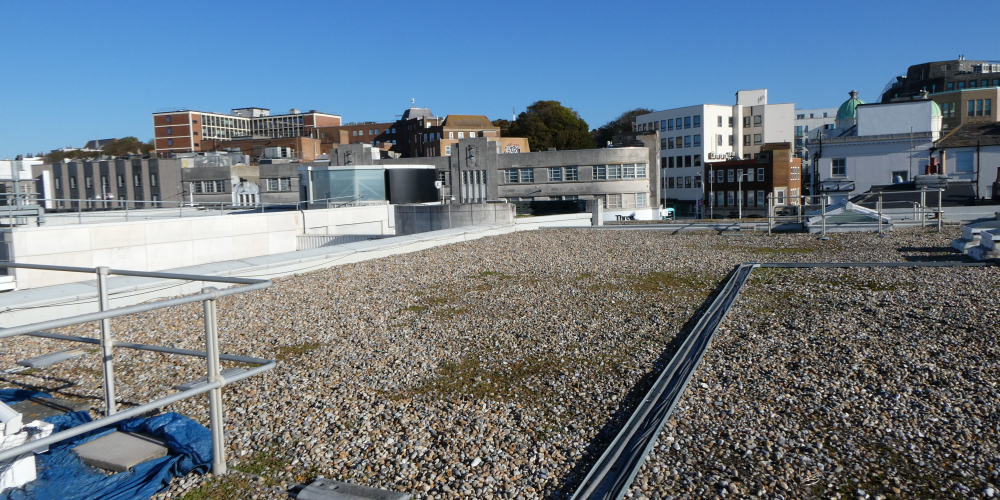
A shopping centre in East Sussex had been experiencing a series of persistent leaks into one of the retail units. Seven leaks had been reported throughout the store and our client required a thorough investigation to identify the exact source of each.
Scope of Works
The scope of the investigation was to:
• Determine the root cause of all reported leaks.
• Assess the performance of existing roof and gutters in the vicinity of the leaks.
• Carry out testing under controlled conditions to replicate leak events.
• Provide clear, evidence-based findings and recommendations for repair.
Our Approach
A systematic approach was adopted to ensure each leak source was accurately located. The following investigation techniques were used:
1. Flood Testing
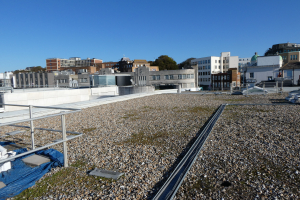
Localised flood testing, using a trace dye, was undertaken to establish the integrity of the roof waterproofing and gutter. This technique was used so that roof finishes, such as paving and ballast, could remain in place for the initial phase of testing.
2. Simulated Rainfall Testing
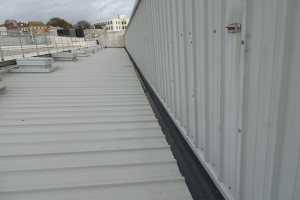
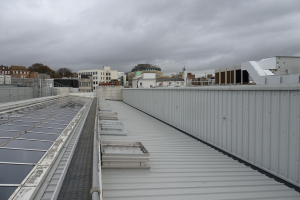
Suspect areas of the structure, such as roof penetrations, joints in cladding and glazing were spray tested to replicate rainfall conditions and observe how the building envelope responded to water exposure.
3. Moisture Profiling and Tracing
Inside the building, we used moisture meters to map damp areas and trace the paths of water ingress. This gave us valuable clues about where leaks were entering and how water was moving through the structure.
Health & Safety
All works were carried out in line with Health and Safety regulations for working at height. Our team followed safe systems of work at all times, using appropriate access equipment, fall protection measures, and exclusion zones to ensure the safety of both our staff and the public.
Findings
By combing several different test methods, we were able to successfully determine the source of all seven leaks. The issues identified included:
• Poorly sealed cladding joints
• Deteriorated glazing seals
• Poorly detailed dpc to parapet wall
Our findings were documented in a comprehensive report including photographs and recommendations giving our client a straightforward plan for remedial repairs.
Conclusion
Our investigation provided our client with clear answers for the cause of each leak enabling them to arrange effective repairs, confident that the underlying issues will be resolved.
Our Accreditations


