
Electronic Leak Detection Based in Edenbridge, Kent
Specialists in Waterproofing Integrity Testing
Electronic Leak Detection (ELD) Testing for Waterproofing Membranes
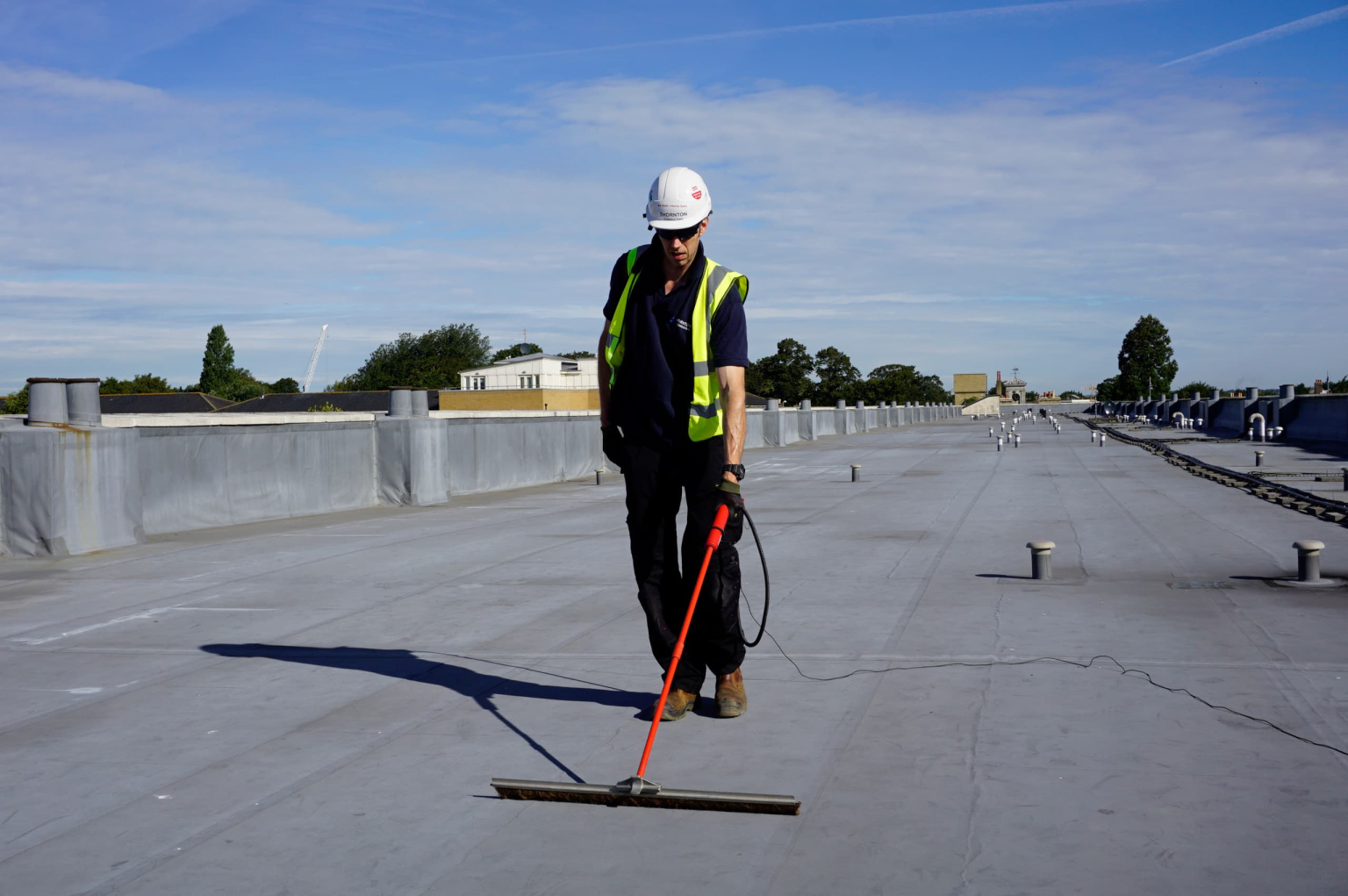
Thornton Consulting provides specialist electronic leak detection (ELD testing) services across the UK, helping clients confirm the integrity of waterproofing membranes and locate breaches quickly and accurately. This service can be used to provide assurance of the integrity of newly installed waterproofing systems as well as being a valuable tool in the process of identify persistent leaks as part of our leak investigation service.
Electronic leak detection is widely used on flat roofs, podium decks, terraces, balconies and other waterproofed structures where even small defects can lead to water ingress, damage to finishes, and costly remedial works. The service is particularly beneficial to roofers, main contractors, landlords, facilities managers and anyone who needs to determine the integrity of their flat roof waterproofing.
What is Electronic Leak Detection?
Electronic leak detection is a non-destructive testing technique that identifies breaches in a waterproofing membrane by using controlled electrical principles to find the precise location of a defect.
Typically, there are two methods used, each has different use benefits, but both rely on the same electrical principles to be affective.
Low Voltage Testing
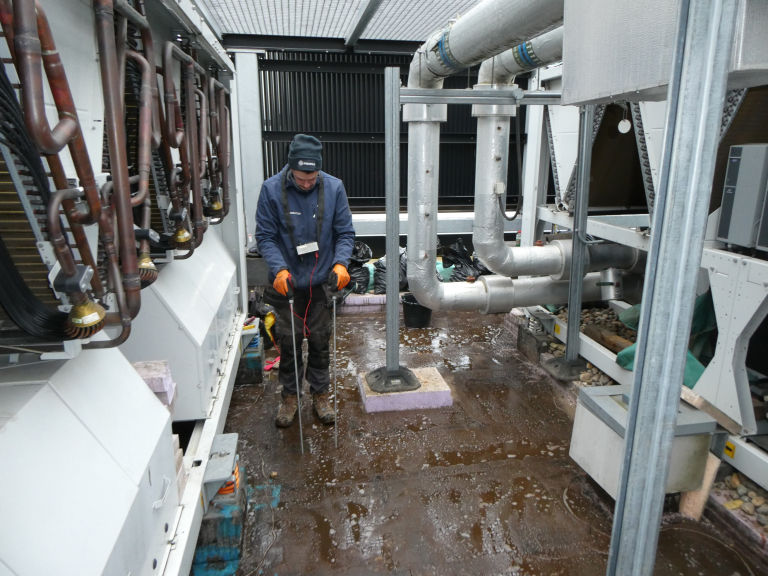
The wet test method, also known as earth leak detection, low voltage testing or “Wet test” relies on the insulating properties of the membrane and electrically conductive properties of water and substrate beneath to be effective.
This highly accurate test simply identifies pulsed electric fields of microscopic proportions and homes in on the source with a sensitive meter.
Since its introduction, this has become the preferred test for most waterproofing systems as it is highly accurate in detecting breaches and simple to implement, typically replacing the traditional method of flood testing of roofs.
Pinhole Testing
This test is both non-destructive and highly accurate, being able to detect pinholes in the membrane barely visible to the naked eye.
In most cases it has now replaced the need for traditional flood testing, saving considerable amounts of time and water.
It is particularly useful for roof leak detection in single ply and liquid applied waterproofing membranes.
Electronic integrity testing of waterproofing membranes, using the Holiday or Pinhole test method, relies on the insulating properties of most membranes and conductive properties of the substrate for the test to be affective.
In some circumstances, however, electronic testing is not possible. For example, EPDM membranes are electrically conductive, in which case Thornton Consulting may be able to offer our Differential Pressure Test, whereby air is drawn through surfactant over laps, thereby testing them for integrity.
Differential Pressure Testing
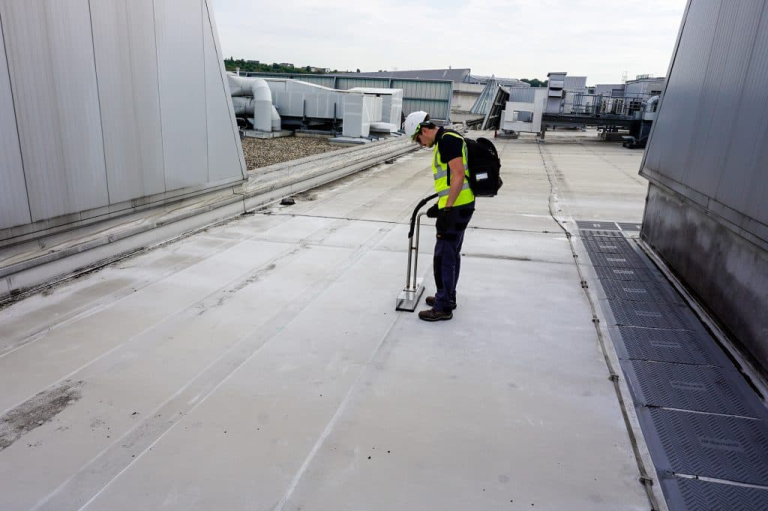
Our Differential Pressure Testing of waterproofing membranes service was developed as an additional technique for roof leak detection when electronic testing is inappropriate or technically incorrect for a specific roof construction or membrane type, such as non-conductive timber deck or EPDM membrane.
It is a non-destructive test which works by reducing pressure on an area of waterproofing membrane within a vacuum chamber and by drawing air through a surfactant applied over membrane laps, we can test them for integrity.
As with other electronic test methods, Differential Pressure Testing has replaced the need for flood testing in many circumstances and provides an efficient and cost-effective solution for roof leak detection.
Why use Electronic Leak Detection for Integrity testing?
- Accurate pinpointing of defects
- Testing can be undertaken prior to handover
- Large areas can be tested systematically
- Verifies detailing and penetrations
- Gives confidence to Roofers and Main Contractors of the integrity of the waterproofing, supporting quality assurance with clear test records.
- Cost effective and efficient
- Uses low or zero volumes of water (depending on test) reducing water related risk to the building as well as having less impact on the environment
By confirming membrane integrity early, ELD testing helps avoid latent defects becoming expensive failures later.
Support for building leak investigations
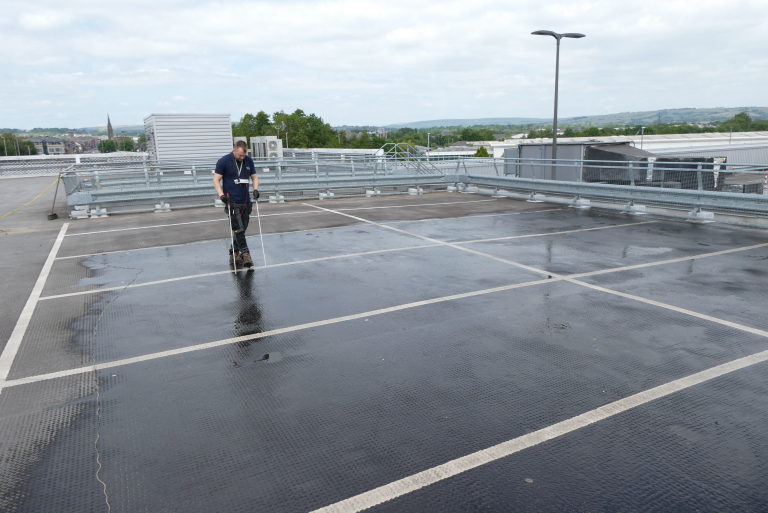
On existing buildings, electronic leak detection can form a key part of a structured leak investigation—particularly where symptoms appear internally but the entry point is unclear. ELD can help identify membrane breaches that may otherwise remain hidden, especially around:
- Upstands and edge details
- Roof penetrations and service entries
- Terminations & laps
- Areas with historic repairs or detailing complexity
When should you consider electronic roof leak detection?
You should consider Electronic Leak Detection testing if:
- A newly installed waterproofing membrane is due for handover or needs QA verification
- The membrane is to be covered by finishes and you want confidence before it becomes inaccessible
- You have unexplained internal leaks and conventional checks haven’t identified the entry point
- A roof or deck has a history of repeat defects and you need an objective assessment
- As part of preventative maintenance you need to establish the condition and performance of an existing roof
Our Reports
A test report with images and a marked up plan will be issued for each roof and test area completed and a Certificate of Waterproofing Integrity (CWI) issued at completion of the project.

Electronic Leak Detection FAQs
-
1. Which waterproofing systems can be tested?
-
Membranes that are an electrical insulator such as:
- Single-ply membranes (PVC, TPO, FPO)
- Liquid-applied membranes (PMMA, PU, Acrylic)
- Bituminous systems (Asphalt, Felt, Hot Melt)
If you have any specific requirements, please contact us for further information.
-
2. Does electronic leak detection damage the membrane?
-
No. Both low-voltage and high-voltage methods are non-destructive.
-
3. How accurate is electronic leak detection?
-
Electronic leak detection can pin-point breaches in the membrane not easily visible to the human eye and locate them to within a few millimetres (10-12mm) on the roof surface.
-
4. Which systems cannot be tested?
-
Typically, membranes that are electrically conductive, such as:
- Sheet metal
- Some EPDM’s

Talk to us about ELD testing
If you’re planning quality assurance testing for a newly installed waterproofing system—or you need help locating the source of a persistent leak—Thornton Consulting can help. We provide electronic leak detection and building leak investigation services across the UK, with a focus on clear reporting and practical outcomes.
Call us on 01342 410508, email us at mail@thorntonconsulting.co.uk or send us a message using the form below. A friendly member of our team will be in touch shortly.
Client Testimonials
Areas we cover in Kent
Thornton Consulting provides Electronic Leak Detection services across the Kent area including Ashford, Canterbury, Chatham, Dover, Edenbridge, Gravesend, Kings Hill, Maidstone, Margate, Sevenoaks, Sittingbourne & Tonbridge.
Waterproof Testing Blog & Case Studies
To find out more about Electronic Leak Detection and how we use it in our work read our case studies and blogs below.



Get in Touch Today
Call us on 01342 410508, email us at mail@thorntonconsulting.co.uk or send us a message using the form below. A friendly member of our team will be in touch shortly.
"*" indicates required fields


